
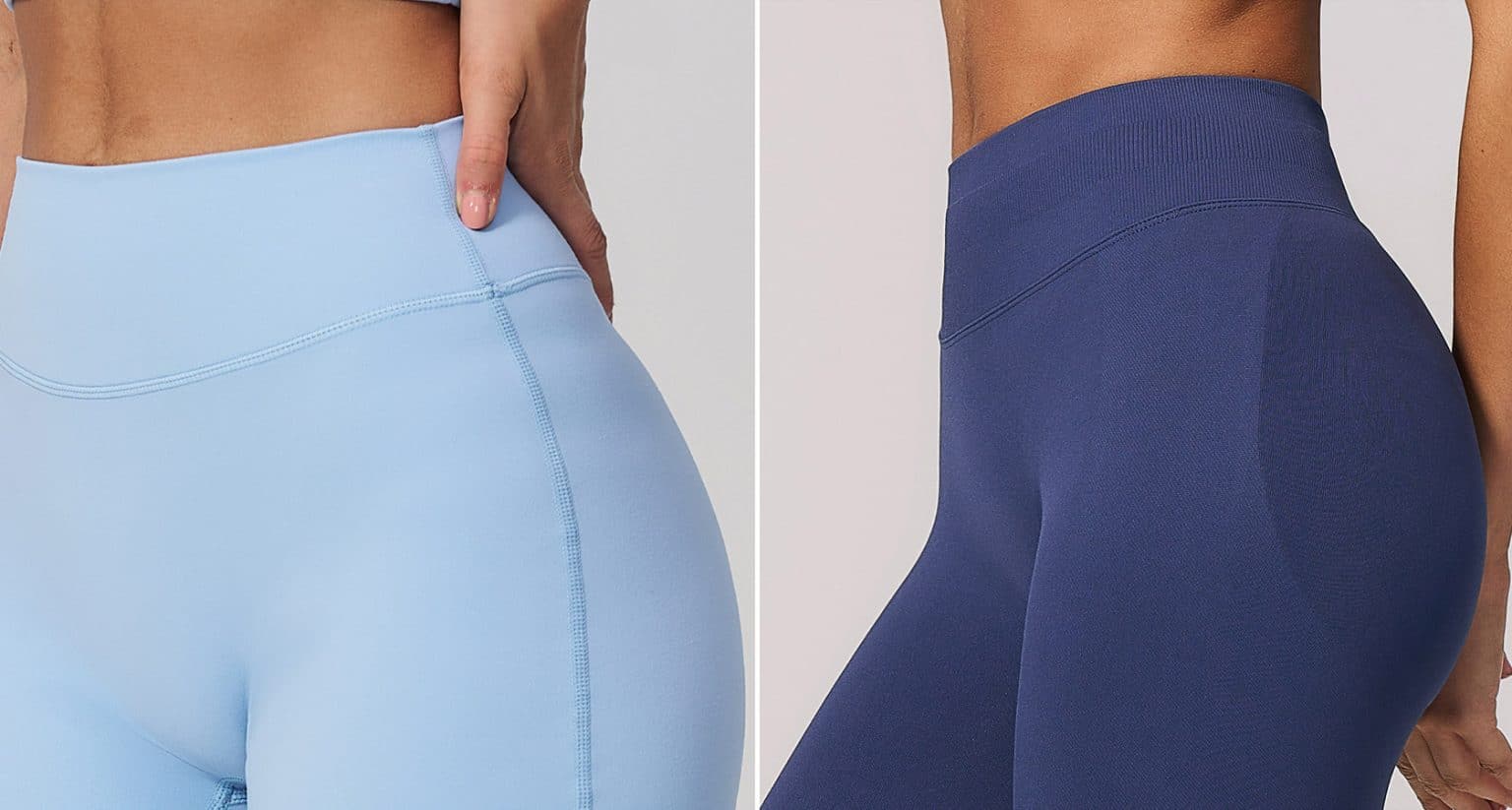
For sportswear brands and product developers, “seamless” and “3D knitting” often appear in the same supplier conversation but get used inconsistently. This article clarifies where the two terms overlap, why circular seamless knitting is the most commercially mature route to 3D-structured activewear, and what parameters to verify when working with a China seamless activewear manufacturer on custom activewear OEM/ODM programs.
In plain terms: seamless knitting means a garment is knitted into its final tube shape from yarn, skipping the cutting and sewing steps that create side seams — which is why seamless leggings and sports bras feel closer to a second skin than a cut-and-sew equivalent, with less chafing and less fabric waste per unit.
What Is 3D Knitting Technology, and How Does Seamless Fit Into It?
3D knitting technology is a manufacturing method in which a computer-controlled knitting machine forms a three-dimensional structure directly from yarn, without a separate cutting and sewing stage — and seamless circular knitting is one of its most widely commercialized implementations for garments.
The category is defined by the method, not by a specific machine brand: “3D knitting” covers everything from flat-bed whole-garment machines (e.g., Shima Seiki, Stoll) producing integrated sweaters, to 3D spacer fabrics for cushioning and automotive interiors, to circular seamless machines producing tubular garments. What unites these is a single continuous knitting process that replaces the traditional “knit flat fabric → cut → sew” sequence, reducing process steps, material waste, and labor input.
Within this broader category, seamless / whole-garment knitting is a product form — garments with no or minimal side seams — rather than a separate technology. Circular seamless machines such as the Santoni SM8-TOP2V and TOP2 FAST platforms are the dominant commercial route for producing this product form in tubular activewear, intimate apparel, and compression garments. This is the technology base that a seamless yoga leggings supplier typically runs on, rather than flat-bed whole-garment machines, because circular knitting is faster and more cost-efficient for high-volume tubular styles.
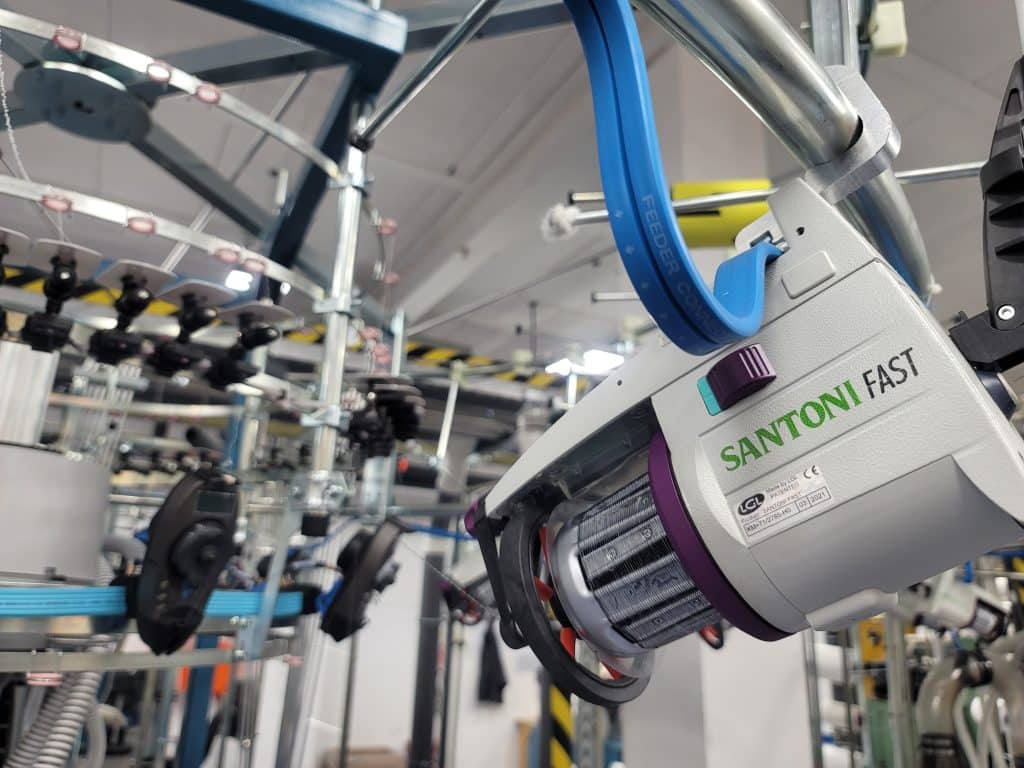
In technical literature, this is sometimes stated explicitly: some sources define “3D knitting” narrowly to mean flat-bed 3D shaping and classify Santoni-type circular machines separately as “seamless knitting” — but in commercial and buyer-facing usage, Santoni seamless technology is widely understood as the leading garment-focused application of 3D knitting.
Santoni’s own newer feature sets — such as selective-terry structures that build localized raised, recessed, or channel patterns on the fabric surface through targeted needle selection — are a direct example of 3D knitting logic applied within a circular seamless platform: the three-dimensionality shows up as textured, functional zoning built into the knit structure itself, not as a separate garment-shaping technology layered on top of it. Buyers should note this distinction has a practical limit: true whole-garment 3D shaping — full sleeve, collar, and body integration without any cut-and-sew step — typically requires multi-bed flat-knitting platforms with dedicated programming software (e.g., Shima Seiki SDS-ONE, Stoll M1plus), which is a different machine class from circular seamless. A supplier’s “3D knitted” claim should specify which of these two is being delivered, since machine class, cost, and applicable product categories differ substantially.
How Is a Seamless Garment Made?
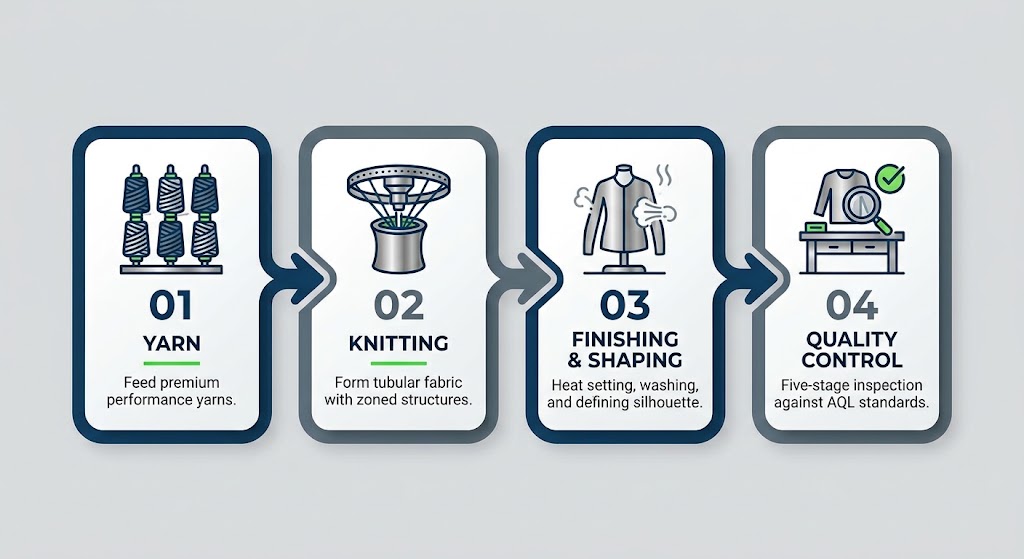
A seamless garment is made by programming a circular knitting machine to knit a tubular panel with zone-specific stitch structures, then finishing only the open edges — no fabric cutting occurs before assembly.
The process runs in four stages:
- Yarn feed and needle selection — electronic needle selection on the circular machine changes stitch structure (jersey, mesh, rib, jacquard, or selective-terry 3D texture) at defined points around the tube circumference, without stopping the knitting cycle.
- Tubular knitting — the machine knits a continuous cylinder whose diameter is fixed by the number of needles engaged and the machine’s needle gauge.
- Shaping — narrowing or widening is achieved through stitch-transfer and tension changes rather than cutting, producing the body taper needed for leggings, sports bras, or base layers.
- Finishing — cutting the tube to length, closing the crotch seam (for bottoms), and applying elastic binding or flatlock at open edges.
In plain terms: the machine effectively “prints” the garment shape in one continuous run, so the fewer separate cutting and sewing steps there are, the fewer places a seam can rub, fray, or fail — which is also why a seamless quote often looks different from a cut-and-sew quote on the same fabric weight.
Needle gauge is the parameter that most directly determines fabric fineness and achievable stitch density. YOU Seamless production runs on 28G (28 needles per inch) as the standard gauge, within the industry-common range of 18G–32G, with 24G–28G most typical for activewear-weight seamless fabric. Needle count scales with cylinder diameter: on a 28G machine, a 13-inch cylinder carries 1,152 needles, and each additional inch of diameter adds approximately 96 needles. This relationship determines which body-size range a given cylinder can knit without re-tooling.
One parameter buyers frequently over-simplify is the link between needle gauge and fabric weight (GSM). In plain terms: the same machine setting does not automatically produce the same fabric weight — the yarn itself changes the outcome. GSM is not a fixed function of gauge alone — it results from the combination of yarn denier, fiber type, loop length, and knitting tension. The same 28G machine can produce meaningfully different GSM outputs depending on whether it is running, for example, 70D/36F nylon versus 150D polyester, and at what tension setting. A longer loop length reduces yarn consumption per unit area and lowers GSM, but there is no universal 28G-to-GSM conversion table that holds across yarn types. Buyers targeting a specific GSM range should request a physical sample knitted with their target yarn specification rather than relying on a gauge number alone — this is a case where the practical answer is “confirm by sample,” not a formula.
How Does 3D-Structured Seamless Construction Improve Comfort and Performance?
Seamless construction improves wear comfort primarily by removing the side seam as a friction point, and 3D-textured zoning adds functional variation without adding seams.
In a cut-and-sew garment, the side seam is a raised, multi-layer stitch line. Under repeated flexion — running, cycling, weight training — this raised line generates localized pressure and abrasion against skin, which is the physical mechanism behind seam-related chafing. Tubular seamless knitting removes this raised structure from the primary body panel, so the friction-load path during movement is distributed across a continuous knit surface rather than concentrated along a stitch line.
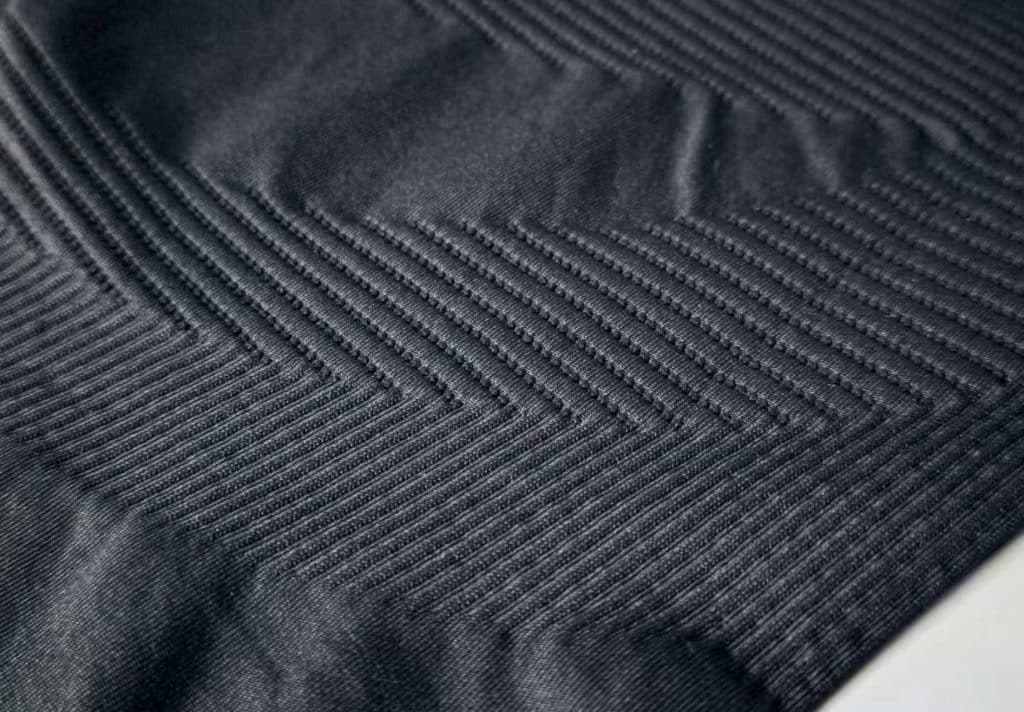
A second mechanism is 3D functional zoning within a single panel. In plain terms: instead of sewing a compression panel onto a mesh panel, the machine knits both zones as one continuous piece — so there’s no seam where they meet, and no weak point there either. Because electronic needle selection can switch stitch structure — including selective-terry raised or recessed textures — mid-course, a single seamless piece can integrate a denser compression zone, a mesh ventilation zone, a textured grip/massage zone, and a reinforced support zone without inserting separate cut panels or additional seams to join them. This is the engineering basis for claims like “second-skin fit”: the fit and texture variation is built into the knit structure itself, not achieved by cutting a garment closer to the body or adding a separate surface treatment.
How Much Fabric Waste Does Seamless 3D Knitting Actually Eliminate?
表格
| Production method | Typical cutting-floor material utilization | Approximate waste rate |
|---|---|---|
| Cut & sew | 75%–85% | 15%–25% offcut waste |
| Seamless circular 3D knitting (tubular) | Near-net-shape, minor trim at collar/hem | Under 5% |
| Flat-bed whole-garment 3D knitting | Yarn-to-garment, minimal post-knit trimming | Approaching zero cut waste |
In plain terms: in cut-and-sew production, roughly a fifth of the fabric roll ends up as scrap before a single garment is sewn — seamless knitting largely removes that scrap because the panel is knitted to the finished shape from the start. The mechanism is straightforward: cut-and-sew waste originates from the geometry mismatch between a flat fabric roll and a curved pattern piece — the marker layout can rarely achieve 100% utilization regardless of pattern efficiency software. 3D knitting, in either its circular seamless or flat-bed whole-garment form, removes this mismatch because the panel is knitted to the finished silhouette, so the only offcuts are trim at the neckline or waistband rather than an entire pattern-shaped scrap.
Seamless Circular Knitting vs. Flat-Bed Whole-Garment 3D Knitting vs. Cut & Sew
表格
| Dimension | Seamless circular (e.g., Santoni) | Flat-bed whole-garment 3D | Traditional Cut & Sew |
|---|---|---|---|
| Category position | Garment-focused subset of 3D knitting | Broader 3D knitting, full garment integration | Not 3D knitting |
| Side seam | None (tubular) | None (body + sleeve + shoulder integrated) | Present, multi-panel assembly |
| Cutting waste | Low (trim only) | Near zero | High (15%–25%) |
| Machine class | Circular weft knitting (e.g., Santoni SM8-TOP2V, TOP2 FAST) | Multi-bed flat knitting (e.g., Shima Seiki, Stoll) | Cutting table + flatbed/overlock sewing |
| 3D texture capability | Selective-terry / selective-zone raised structures | Full 3D silhouette shaping | N/A |
| Typical product categories | Leggings, sports bras, base layers, shapewear | Sweaters, structured knit tops, complex silhouettes | All categories |
| Relative unit cost | Medium–high | High | Low–medium |
What Quality Parameters Should Buyers Verify Before Sourcing 3D-Knitted Seamless Compression Garments?
Buyers should verify needle gauge, inspection standard, and lot-level defect classification before confirming a seamless 3D-knit order — these three parameters determine whether the garment will meet a target compression and durability spec at scale.
- Needle gauge: confirm the actual gauge used for the program (YOU Seamless standard production runs 28G) rather than accepting a general “fine gauge” description.
- Inspection standard: our own factory runs a five-stage 100% inspection process against AQL 2.5, within the industry-common AQL 2.5–4.0 range for activewear. Ask specifically which AQL level and which inspection stage(s) apply to seam integrity, 3D texture/zone consistency, and color/dye lot matching.
- Sample-to-bulk consistency: because GSM, stretch recovery, and 3D texture depth depend on yarn lot and tension setting rather than gauge alone, request that pre-production samples be knitted with the confirmed bulk yarn lot, not a generic development yarn.
On lead time, our own factory’s standard bulk production runs 40–45 days after pre-production sample confirmation, with sampling itself taking 8–15 days depending on pattern complexity — figures that sit within the industry-common seamless range of 35–60 days bulk and 7–20 days sampling. Minimum order quantity for a customized seamless style is 500–1000 pieces, with 2 colorways and 3 sizes achievable at 600 pieces combined — worth confirming early if a program requires multiple colorways at low volume, which is a common constraint when evaluating custom activewear OEM/ODM proposals against a limited launch budget.
Frequently Asked Questions
What is the typical MOQ for custom seamless activewear?
A standard customized seamless style typically requires 450–500 pieces per style. Combining 2 colorways with 3 sizes is achievable at approximately 600 pieces total. This is broadly in line with the industry-common seamless MOQ range of 300–800 pieces per style, though it runs higher than typical cut-and-sew minimums because machine programming and calibration costs are amortized across the run.
Can seamless activewear be fully customized — color, texture, and fit?
Color is customized through yarn dyeing or garment dyeing depending on the program. Texture is customized through electronic needle selection, which can produce zoned mesh, rib, compression, or selective-terry raised patterns within a single knitted piece. Fit customization (taper, compression gradient, panel placement) is achieved through programming rather than pattern cutting. The degree of customization achievable within a given MOQ and timeline should be confirmed against the specific machine configuration and yarn lot in use.
Why is seamless knitting considered more sustainable for activewear production?
The clearest, verifiable reason is material efficiency: cutting-floor waste in cut-and-sew production typically runs 15%–25%, while seamless circular knitting reduces this to under 5% because the panel is knitted to the finished shape rather than cut from a flat roll. This is a measurable input-reduction claim. Broader sustainability claims — such as carbon footprint or water usage — depend on additional factors (dye process, yarn source, energy mix) and should be evaluated separately rather than assumed from the waste-reduction figure alone.
Next Steps for Technical Verification
The most reliable way to evaluate a seamless partner is a physical sample, not a specification sheet. As a China seamless activewear manufacturer running our own factory across circular seamless production, we support the full OEM/ODM development cycle — from concept and yarn selection through sampling and bulk delivery — for brands developing seamless yoga leggings, sports bras, and compression wear.
For technical teams ready to move from research to validation, the next concrete step is requesting a physical sample knitted on a confirmed gauge and yarn lot, along with a standard color card, so that GSM, stretch recovery, and texture-zone consistency can be checked directly against your target spec before committing to a bulk order.
