
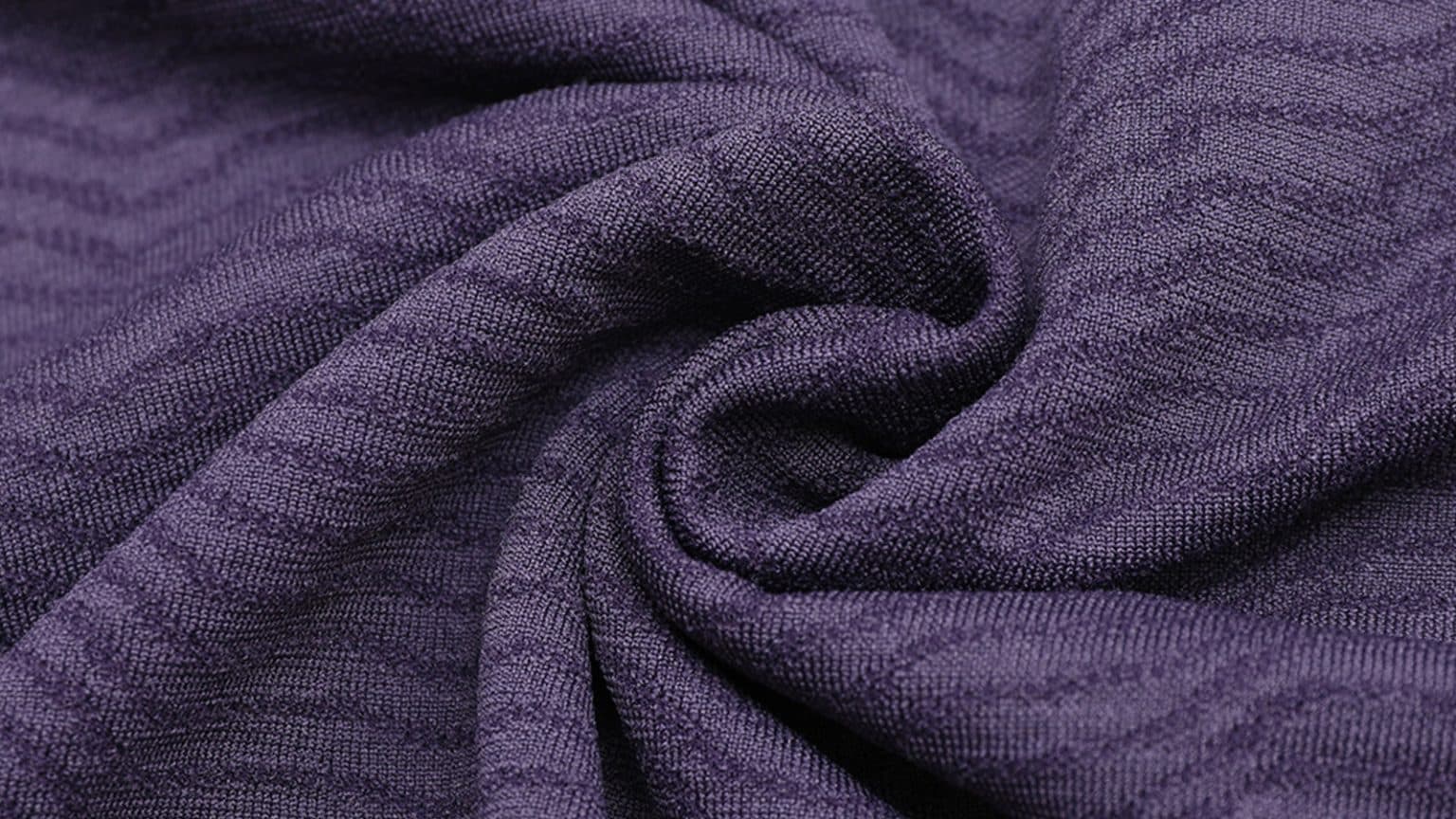
Recycled polyester activewear uses fiber reprocessed from post-consumer PET rather than virgin polyester resin, but the recycled origin alone does not confirm moisture-wicking, antimicrobial, or UPF performance — those require separate fabric testing.
For sourcing teams evaluating recycled fabric activewear, the material claim and the performance claim are two separate questions. This guide separates what recycled origin actually proves from what still needs to be verified at the product level, using YOU Seamless’s own Santoni seamless knitting operation as a sustainable activewear manufacturer for reference.
Quick Facts — At a Glance
| Item | Detail |
|---|---|
| Core process | Santoni seamless circular knitting (SM8-TOP2V, TOP2 FAST) |
| Knitting gauge | 28-needle standard |
| Material options | GOTS-certified organic cotton, recycled nylon, bamboo fiber, rPET from post-consumer sources |
| Quality control | 5-stage 100% inspection + AQL 2.5 sampling |
| Stock MOQ | 1 piece |
| Custom Santoni seamless MOQ | 450–500 pcs/style |
| Stock sample lead time | 2–3 days |
| Custom sampling lead time | 8–15 days |
| Bulk production lead time | 40–45 days after pre-production sample approval |
| Supply model | our own factory |
Recycled Polyester Comes From Reprocessed PET, Not Directly From the Bottle on the Shelf
Recycled polyester activewear is made from PET that has already been collected, sorted, cleaned, and reprocessed into chip or pellet form before it is ever spun into fiber — by the time it reaches a knitting machine, it is structurally polyester yarn, not bottle material.
The recovery-to-fiber chain typically runs through collection, sorting, mechanical or chemical reprocessing, and spinning into rPET fiber or yarn. This reprocessing step is what allows recycled polyester to reduce reliance on virgin polyester resin at the raw material stage — the fiber itself is chemically equivalent to virgin polyester once spun, which is why it can be knitted, dyed, and finished using the same equipment and processes.
At YOU Seamless, this is sourced as rPET originating from post-consumer recycling streams, which is then processed into fiber or yarn for use in recycled fabric activewear development, subject to material and product certification requirements.
What recycled origin does not automatically confirm:
- The exact recycled content percentage in a finished garment
- A specific functional finish (moisture-wicking, antimicrobial, anti-odor)
- That a completed performance test has been run on that style
- That every style under one certification scheme is automatically covered
Confirmed: GRS-certified rPET + spandex blend material range available. Requires testing: moisture-wicking, antimicrobial finish, UPF, colorfastness to perspiration, post-wash dimensional stability.
Seamless Knitting Reduces Cut-and-Sew Steps but Does Not Eliminate All Seams
Santoni seamless knitting forms the body of an activewear garment directly on a circular knitting machine, reducing the number of separate panels that need to be cut and sewn together — but waistbands, gussets, labels, and trims are still typically attached as local seams.
The technical logic: because the knitting machine shapes the garment structure directly, different zones of the same piece — torso, underarm, waistband — can be knitted with different stitch density or elasticity in one continuous process, instead of assembling separate pre-cut fabric panels. YOU Seamless runs this on a 28-needle standard, which affects fabric fineness and hand feel; higher-density seamless machines are also common in the industry for different fabric weight targets.
Needle gauge is a machine specification, not a quality tier — actual garment performance still depends on yarn, stitch structure, finishing, and inspection standards.
Where local seams remain (waistband closures, crotch construction, labels), seam finishing methods such as flatlock or coverstitch are selected based on where comfort against skin matters most versus where stretch recovery at hems and cuffs matters most. Final seam comfort depends on the combination of stitch settings, yarn, tension, and fabric elasticity — not on the stitch type alone.
Spandex Content Determines Stretch Behavior, Not the Recycled Fiber Itself
The stretch and recovery performance of recycled polyester activewear comes primarily from the spandex ratio and how it is integrated into the yarn and knit structure — recycled polyester content affects material sourcing, not elasticity.
Spandex content that is too low may under-perform in high-stretch movement categories; content that is too high can affect cost, dyeing behavior, chlorine resistance, and heat-setting requirements. The right ratio depends on the garment’s intended use case and should be confirmed through wear testing rather than assumed from fiber percentage alone.
Recycled Polyester and Virgin Polyester Activewear Compared
Recycled and virgin polyester activewear can perform comparably in stretch, structure, and durability — the difference lies in raw material sourcing and the documentation required to support environmental claims.
| Comparison | Recycled Polyester Activewear | Conventional Virgin Polyester Activewear |
|---|---|---|
| Raw material source | Certified or document-supported recycled polyester | Virgin polyester resin |
| Athletic performance | Depends on fiber, yarn, knit structure, spandex ratio, finishing | Depends on the same variables |
| Environmental claim | Requires certification, traceability, or transaction documentation | Typically no recycled-content claim involved |
| Source of stretch | Spandex + knit structure | Spandex + knit structure |
| Quality verification | Requires both certification review and finished-garment testing | Requires finished-garment testing |
Certification Covers a Specific Product Scope, Not a Brand-Wide Guarantee
A GOTS or GRS certificate applies to a defined material, product line, or transaction scope — it does not mean every style a factory produces is automatically covered under that certificate.
GOTS applies to processing, manufacturing, and trading of certified organic fiber textiles; it is not interchangeable with “organic cotton” as a raw material claim on its own. Similarly, GRS documentation needs to trace to the specific yarn, fabric, or supply chain step in question. When a brand states “GRS-certified recycled polyester activewear,” that claim should be confirmed against the specific product’s certificate scope — not inferred from a factory-level or material-level certificate alone.
YOU Seamless can source GOTS-certified organic cotton, recycled nylon, bamboo fiber, and rPET from post-consumer sources for development. Which specific certification applies to which specific style should be confirmed at the order stage, based on valid certificate scope and product documentation.
Quality Control Standards Define Acceptable Defect Rates, Not Zero-Defect Promises
A 5-stage 100% inspection process combined with AQL 2.5 sampling is designed to catch knitting, sewing, dimensional, and cosmetic defects across production — but AQL 2.5 is an accepted sampling threshold, not a zero-defect guarantee.
Activewear is subject to repeated stretch, friction, sweat exposure, and washing, which is why stretch recovery, pilling resistance, colorfastness, and post-wash dimensional change are commonly tested items beyond the standard inspection process. Specific test methods and pass/fail thresholds should be confirmed per product based on end-use requirements.
Sourcing Recycled Seamless Activewear Requires Matching Lead Time to Order Type
Stock recycled seamless styles can ship samples in 2–3 days, while custom Santoni seamless development requires 8–15 days for sampling and 40–45 days for bulk production after pre-production sample approval.
| Order Type | MOQ | Sample Lead Time | Bulk Lead Time |
|---|---|---|---|
| Stock items | 1 piece | 2–3 days | N/A (ready stock) |
| Custom Santoni seamless | 500–1000 pcs/style | 8–15 days | 40–45 days post-PP sample |
This applies to eco-friendly seamless underwear, seamless bras using eco-friendly fabrics for everyday wear, and recycle seamless leggings development alike — the lead time structure is tied to order type (stock vs. custom), not to the specific garment category.
Working With a Recycle Seamless Leggings Manufacturer Means Verifying Documentation Before Production
Before placing a bulk order for recycled polyester activewear, buyers should request the certificate scope for the specific style, the finished-garment test report relevant to end use, and confirmation of recycled content percentage — not rely on general “eco-friendly” language alone.
This applies across categories — recycled fabric activewear, eco-friendly seamless underwear, and seamless bras made with eco-friendly fabrics for everyday wear all carry the same verification requirement: material sourcing claims and performance claims are documented separately, and both should be checked against the specific SKU before confirming an order.
Ready to develop your own recycled polyester seamless activewear line? Share your target style, fabric composition, and order quantity with our team — we’ll confirm certification scope, MOQ, and production lead time for your specific SKU.
