
What is a Yarn? The Fundamental Building Block of Textiles
When asking what is a yarn or what is the yarn, the technical definition refers to the raw materials processed from fibers that possess a certain strength, fineness, or different appearance structures, acting as the basic units of any fabric.
The structural transformation from raw fiber to yarn is called spinning. To meet strict weaving and knitting requirements, fibers must undergo several precise mechanical processes:
- Loosening: Breaking large fiber blocks into small pieces and bundles.
- Carding: Breaking down small pieces into a single state and disrupting horizontal connections between fibers, though never completely eliminating them.
- Drawing: Elongating and thinning a collection of curved fibers, allowing them to straighten to a predetermined thickness.
- Twisting: Utilizing rotational motion to twist a thin strip of fibers around its own axis, fixing the longitudinal connection through internal friction.
What is Yarn Made Of? Natural vs. Synthetic Fibers
Addressing the common queries of what is yarn made of, whats yarn made of, and what is yarn made from requires categorizing materials by their fiber length and structural behavior.
Natural Yarns (Staple Yarns)
Sourced from raw materials like long-staple cotton, linen, and merino wool, these fibers range from tens to hundreds of millimeters. While they offer excellent moisture absorption, their relatively low elasticity and poor stretch recovery make them less suitable for high-compression athletic wear.
Synthetic Yarns (Filament Yarns)
Advanced activewear relies heavily on continuous filament yarns (over 800m in length) such as Nylon (Polyamide), Polyester, and Spandex (Elastane). These fibers are highly parallel, tightly arranged, and provide exceptional strength utilization.
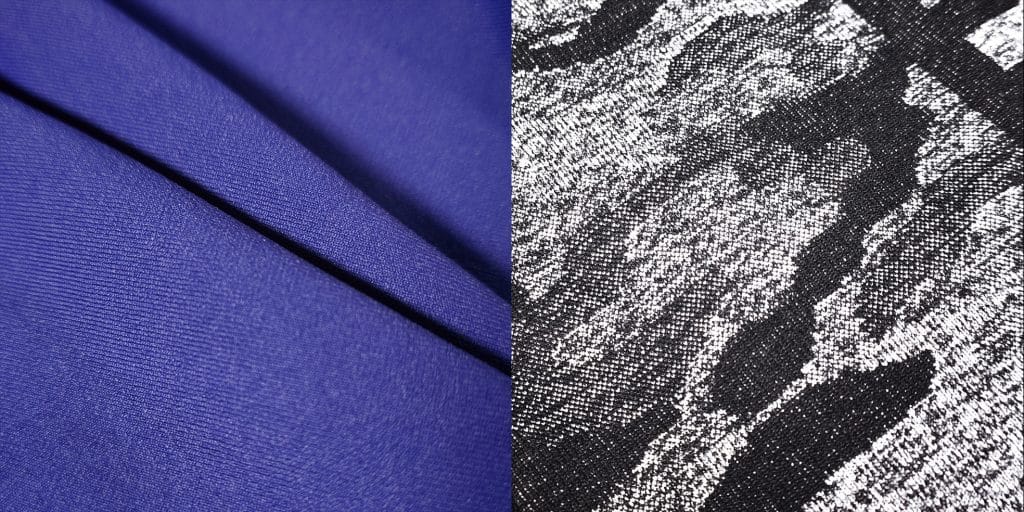
- Solid Colors Specification: For manufacturing solid-color seamless garments—such as standard Black leggings—the optimal parameter is a 90% Nylon and 10% Spandex blend. Nylon delivers extreme abrasion resistance and a soft hand-feel, while Spandex provides the critical stretch and recovery memory.
- Two-Tone & Jacquard Specification: For complex designs like L. Grey and D. Grey melange, or waistbands featuring knitted jacquard logos, a tri-blend of Nylon + Polyester + Spandex is structurally required. This relies on the cross-dyeing temperature differential: Polyester requires a high-temperature first dye bath to absorb color, followed by Nylon, which is dyed at a lower temperature in the second bath. Spandex acts solely as the elasticity engine and remains uncolored.
Essential Yarn Characteristics & Qualities
Fineness is the most critical indicator when evaluating yarn characteristics and the overall grade of a yarn material. The finer the yarn, the smoother and more delicate the woven fabric.
To standardize yarn qualities across different materials, the textile industry utilizes specific measurement units and precise conversion formulas:
Conversion of Fineness Units:
- 1S = 1.69N
- 1N = 0.59S
- Tt = 583.1 / S
- Tt = 1000 / N
(Note: ‘S’ represents English count, ‘N’ represents Metric count, ‘Tt’ represents Yarn density in tex, and ‘D’ represents Denier).
| Fineness Unit | System Type | Core Definition | Primary Material Application |
| Denier (D) | Constant Length | Weight in grams of 9,000 meters of continuous fiber. | Synthetic filaments (Nylon, Polyester, Spandex in seamless wear) |
| Tex (Tt) | Constant Length | Mass in grams per 1,000 meters of yarn. | Universal textile standardization |
| English Count (S) | Constant Weight | Number of 840-yard lengths in 1 lb of yarn at standard moisture regain. | Cotton and cotton-blended staple yarns |
| Metric Count (N) | Constant Weight | Length in kilometers of 1 kg of yarn. | Wool and wool-blended textiles |
Method for Expressing Yarn Fineness:
In seamless engineering, accurately documenting the yarn structure is mandatory for production consistency. Below is the standard industrial representation matrix:
| Yarn Name | Representation (tex) | Representation (S) | Representation (N) | Representation (D) |
| Single Yarn | 18tex | 21S | 60N | 70D |
| Strand (Double Strand) | 18tex × 2 | 21S/2 | 60N/2 | 70D × 2 |
| Multicolored Yarn | 18tex+18tex | 21S/21S | 60N/60N | 70D+70D |
| Yarns of Different Thicknesses | 18tex+5tex | 40S/10S | 2N/10N | 200D+45D |
| Yarn with Different Units | — | 40S/45D | 20N/10D | — |
In seamless circular knitting, Denier (D) is the governing parameter. For instance, engineering a premium seamless sports bra often involves pairing a 70D/48F Nylon filament with a 40D Spandex core (Yarn with Different Units). This precise fineness combination controls the final garment’s GSM, balancing opacity with breathability.
Understanding Yarn Twist and Yarn Hairiness
Twisting binds the fiber bundle in one direction to increase fastness, elasticity, and smoothness. The twist direction is categorized as either Z-twist (left-hand twisting) or S-twist (right-hand twisting).
Controlling the twist level is the ultimate solution to managing yarn hairiness.
- Soft Twist Yarn: Features less than normal twist. While it creates a soft canopy, the weak internal cohesion allows short fibers to easily protrude. This severe yarn hairiness is the primary culprit behind fabric pilling.
- Regular & Overtwisted Yarn: Features normal to high twist levels, creating tight fiber grip, strong reflection, and high strength.
In high-friction environments like gym leggings, yarn hairiness is a fatal defect. By enforcing strict parameter controls and selecting premium regular-twisted filament yarns, technical manufacturers eliminate surface hairiness, ensuring the final garment easily passes rigorous 50-wash industrial anti-pilling tests.
Advanced Yarn Shape: Morphological Engineering in Seamless Knitting
Beyond fineness and twist, the physical morphology (Yarn Shape) dictates the garment’s tactile and functional performance. In premium seamless manufacturing, we engineered the transition from standard continuous filaments to textured structures.
- Continuous Filament Yarn: The structural backbone. Unlike short staple yarns, synthetic filaments are highly parallel with minimal unevenness. This provides maximum strength utilization and zero fluffiness, creating the durable base for high-compression zones in D. Grey or Black activewear.
- Textured Yarn (DTY/ATY): The ultimate solution to the “plastic feel” of synthetic fibers. By subjecting chemical filaments (Nylon/Polyester) to spatial curling and deformation processes (e.g., Air Textured Yarn or Draw Textured Yarn), we permanently disrupt the parallel fiber state. This morphological engineering achieves a natural, cotton-like hand feel (fluffiness, matte luster, and supreme softness) while retaining 100% of the synthetic fiber’s moisture-wicking and stretch-recovery capabilities.
From Yarn to Garment: Sustainable Manufacturing and Market Testing
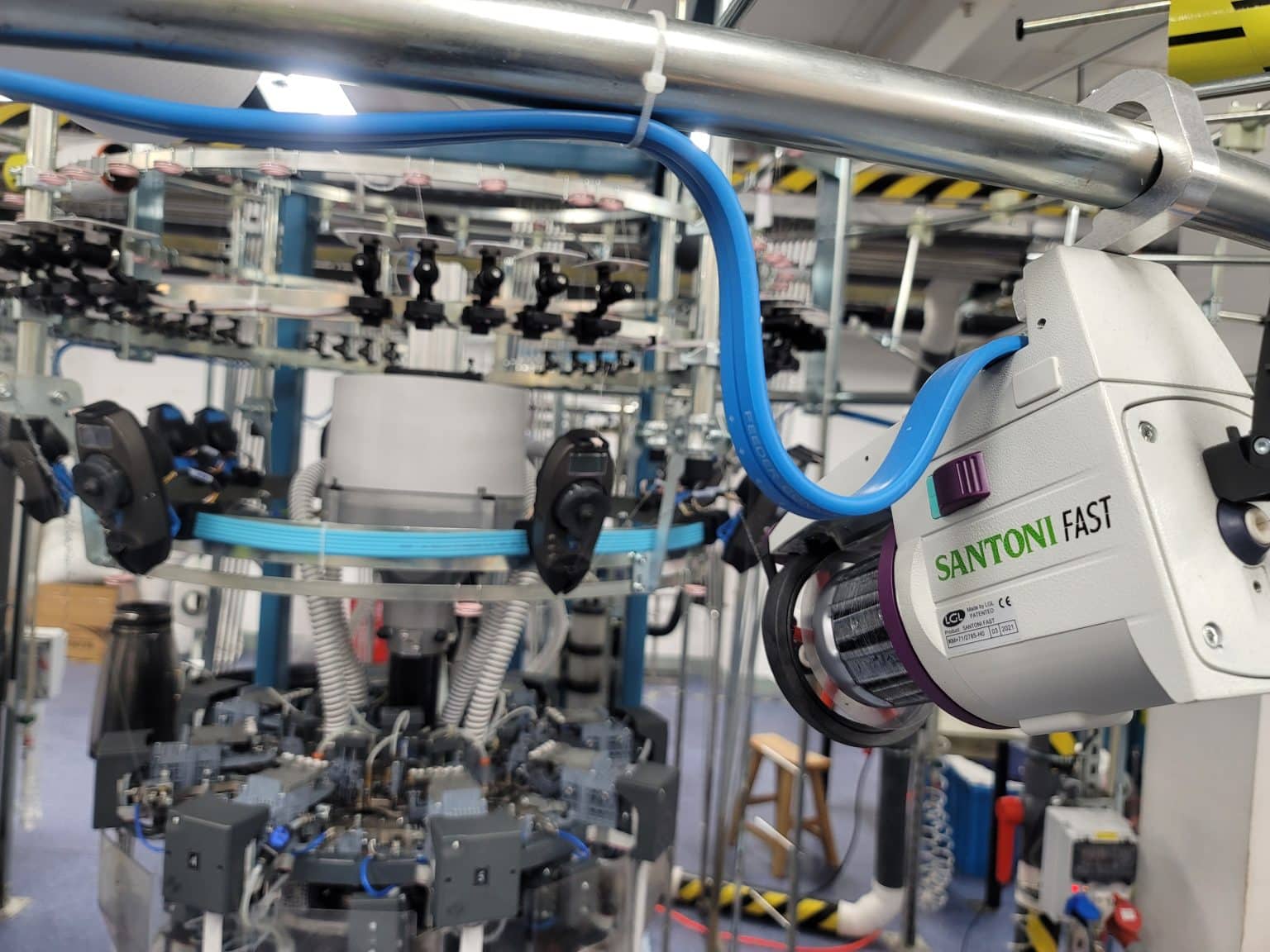
Seamless clothing manufacturing is inherently eco-friendly and structurally sustainable. By directly feeding precisely engineered yarns into specialized Santoni circular knitting machines, garments are knitted directly into tubular forms. This eliminates the pattern-cutting waste inherent in conventional cut-and-sew production, resulting in measurably reduced waste at scale.
We empower brands to scale without compromising on technical yarn specifications. By optimizing our machine allocation, we offer custom seamless activewear with highly accessible MOQs (starting from 100-300 pcs/color/size), allowing you to test the market with less inventory risk while maintaining absolute confidence in fabric performance.
