
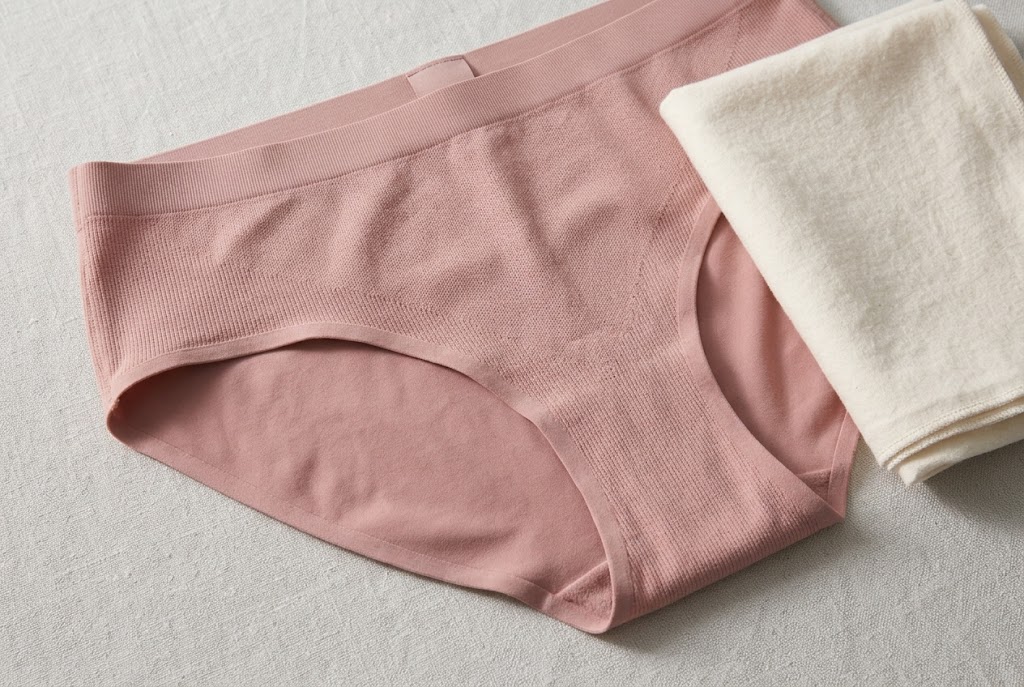
Nylon-spandex and polyester-spandex can both support seamless underwear; the right choice depends on hand feel, stretch, breathability, cost and product positioning.
For most seamless underwear, nylon-spandex is the safer starting point. It typically feels smoother, stretches and recovers well, and gives a second-skin finish. Polyester-spandex is a strong alternative for quick-drying, performance-led or cost-conscious lines. In practice, the polyester vs nylon underwear decision depends on more than fiber type. GSM, knit structure, spandex ratio and gusset design all change how a garment feels. Many styles also blend in cotton, Modal or bamboo-derived cellulosic fibers for softness and moisture absorption. In custom seamless underwear development, YOU Seamless treats fiber choice as only one part of the equation, balancing hand feel, stretch recovery, breathability, cost and production requirements.
Nylon vs Polyester Underwear: The Short Answer
Nylon-spandex is often preferred for premium seamless underwear because of its smooth texture, stretch, recovery and silky feel. Polyester-spandex can be a strong choice for performance, quick-drying and cost-conscious lines. Neither is universally better; the final choice depends on how the garment is built and who it is for.
The factors that decide the outcome are:
- GSM (fabric weight)
- Knit structure
- Spandex ratio
- Gusset design
- Product positioning
What Are Nylon and Polyester?
Nylon (also called polyamide) and polyester are both synthetic fibers, commonly used in underwear and activewear. Both are often blended with spandex, also called elastane, for stretch and recovery. Differences in comfort come from yarn type, knit construction, finishing and garment design as much as from the base fiber.
Both fibers are typically petroleum-derived, though recycled versions exist. Spandex is rarely used alone; it is knitted in at a small percentage to give underwear its elasticity and shape retention.
Polyester vs Nylon Underwear: Pros and Cons
Nylon tends to win on hand feel and stretch, while polyester tends to win on drying speed, color retention and cost. Results vary with yarn and construction, so treat this table as a general guide rather than a rule.
| Factor | Polyester Underwear | Nylon Underwear | What It Means for Seamless Underwear |
|---|---|---|---|
| Hand feel | Can feel slightly drier or crisper | Often smoother and silkier | Nylon suits a second-skin, no-show feel |
| Stretch and recovery | Good with spandex | Often excellent with spandex | Recovery affects shape retention over many washes |
| Breathability | Depends on knit and GSM | Depends on knit and GSM | Mesh zones and lighter GSM matter more than fiber alone |
| Moisture management | Relatively low absorption; relies on surface wicking and construction | Can absorb somewhat more moisture; performance still depends on knit and finish | Both can work well with the right GSM, knit structure and moisture-wicking finish |
| Odor | May hold odor in some wearers’ experience | Often perceived as more odor-friendly | Varies with fit, finish and washing habits |
| Durability | Strong and resilient | Strong, with excellent toughness | Both last well when spandex is balanced |
| Abrasion resistance | Good | Typically very good | Matters for leg openings and waistbands |
| Color and print potential | Holds color well; strong for prints | Dyes richly; good for solids | Polyester suits bold prints, nylon suits deep solids |
| Cost | Often lower | Often higher | Polyester can help entry-level price points |
| Best applications | Activewear underwear, value lines | No-show panties, thongs, shapewear | Match fiber to the product’s job |
Breathability, Sweat and Odor: Which Fabric Performs Better?
Neither fiber is automatically more breathable or fresher. Polyester is often associated with dampness or odor, and nylon with a smoother, cleaner feel, but real performance depends on GSM, knit density, mesh zones, moisture-wicking finish, fit and washing habits.
Polyester absorbs relatively little moisture and relies more on surface wicking, airflow and fabric construction to keep the wearer comfortable. A dense knit or overly tight fit can still feel warm, even when the fiber itself is quick-drying. Open knit zones and lighter GSM improve airflow in both fibers. Some wearers find that polyester holds odor longer, but this is a common perception rather than a guarantee.
If you have persistent irritation or discomfort, consult a healthcare professional. Fabric choice is one factor among many.
Cotton, Modal and Bamboo Blends for Seamless Underwear
A 92% nylon and 8% spandex base is a common starting point for seamless underwear. Cotton, Modal, bamboo-derived cellulosic fibers and other materials can be blended into the knit, typically adding softness and moisture absorption. The right ratio depends on the product, not a universal rule.
In custom development, these additional fibers may account for roughly 10%–60% of the blend, with nylon and spandex adjusted according to the desired softness, stretch, recovery and cost target.
- Lower blends may preserve more stretch and recovery.
- Medium blends may improve softness and moisture absorption.
- Higher blends may feel softer, but they need careful balancing of spandex, knit density, recovery and durability.
Bamboo-derived fiber is a cellulosic fiber made by processing pulp. We do not treat it as inherently sustainable or biodegradable. If bamboo-derived fibers are part of your sustainability positioning, confirm the fiber type, certification scope, durability requirements and MOQ before development. Specialty or certified yarns, including GRS-certified RPET and recycled polyester, may carry higher MOQs.
Why the Cotton Gusset Matters
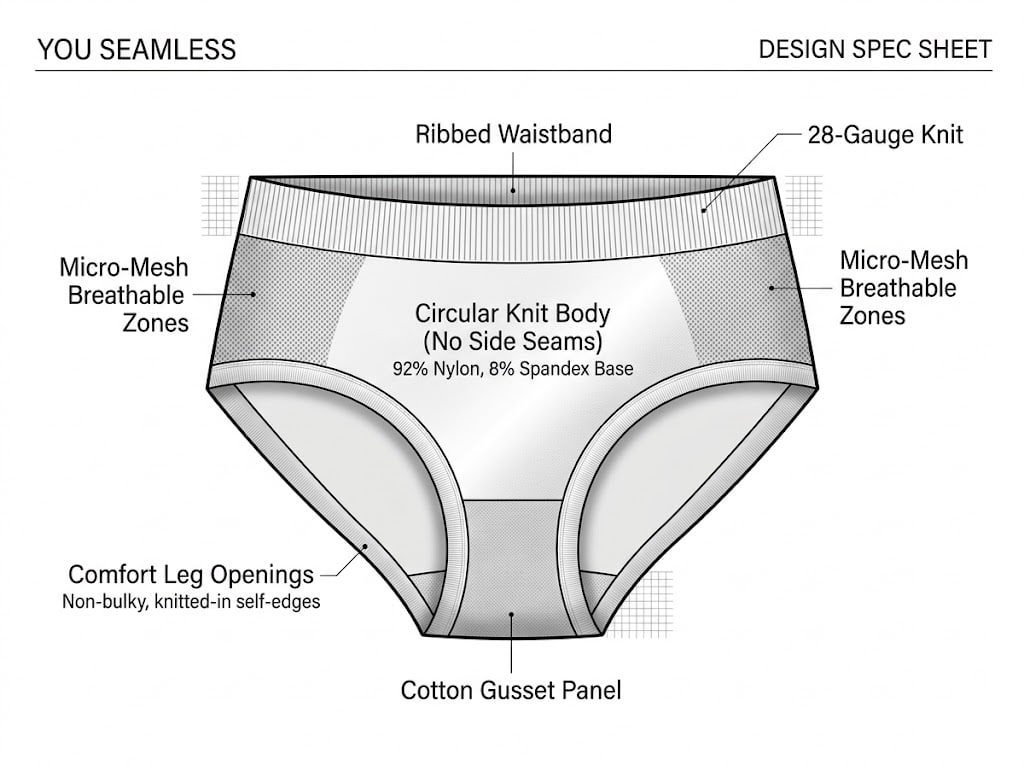
The gusset is the crotch panel, the area that touches skin longest. A cotton gusset can improve softness, airflow and moisture management there, while the nylon-spandex or polyester-spandex body provides stretch, support and a smooth silhouette. It is a comfort feature, not a cure for hygiene or health concerns.
Gusset performance depends on fit, seam placement and knit density as well as the fiber. In our own factory, seamless bodies are knitted on Santoni circular knitting machines at 28 gauge. A finer gauge supports a smoother surface. Edges can be finished with four-needle six-thread Flatlock or three-needle five-thread Coverstitch, which keeps seams flat and helps reduce chafing.
For brands targeting sensitive-skin or everyday-comfort positioning, an organic-cotton gusset can be a useful material option; certification status should be confirmed before development.
Which Fabric Is Best for Activewear and Everyday Wear?
For everyday wear, nylon-spandex or nylon-Modal-spandex with a cotton gusset is a common choice. For activewear underwear, polyester-spandex or nylon-spandex with moisture-wicking construction and breathable zones often performs well. For shapewear, higher-support nylon-spandex is typical.
- Everyday seamless underwear: softness and a smooth line matter most, especially for styles such as seamless panties and seamless thong underwear.
- Activewear underwear: quick drying, airflow and a secure fit matter most.
- Shapewear and compression: engineered compression zones and strong recovery matter most.
- Men’s underwear: boxer briefs and performance underwear follow the same logic, favoring moisture management and leg-opening comfort.
Anti-chafing performance comes from seamless construction, smooth edges, correct fit, moisture management and fabric recovery, not from fiber type alone.
How to Choose the Right Fabric for Your Seamless Underwear Brand
While everyday wearers simply want to know which fabric feels better, brand owners must balance comfort, cost, durability and manufacturing realities. If you are developing a seamless underwear line, here is how to make the right choice.
| If Your Priority Is… | Recommended Fabric Direction | Why |
|---|---|---|
| Premium no-show feel | Nylon-spandex | Smooth, stretchy, second-skin finish |
| Everyday softness | Nylon-spandex with cotton or Modal | Adds softness and moisture absorption |
| Activewear and quick-dry performance | Polyester-spandex, or nylon-spandex with breathable knit | Faster drying and airflow zones |
| Shapewear or compression | Higher-support nylon-spandex | Strong recovery and engineered zones |
| Sustainable positioning | GRS-certified RPET, recycled polyester or bamboo-derived fibers | Recycled content or alternative fibers; confirm fiber type, certification scope, durability and MOQ before development |
| First collection, limited budget | A familiar nylon-spandex or polyester-spandex base | Easier to source, sample and scale |
Supply-chain realities
Fabric choice is only one part of launching a seamless underwear line. MOQ, sampling time, production lead time and quality control also affect whether a nylon-spandex, polyester-spandex or blended construction is practical for your brand.
A 92% nylon and 8% spandex construction is a familiar seamless underwear base, so it may be easier to source, sample and scale. Specialty blends, recycled polyester, recycled nylon, certified cellulosic fibers or unusual ratios may require additional yarn sourcing, more sampling or higher MOQs.
At YOU Seamless, custom seamless underwear typically starts at 500–1,000 pieces per style. Orders of 600 pieces or more can include 2 colors and 3 sizes. Custom samples usually take 8–15 days, while ready-stock samples can be provided in 2–3 days; ready-stock items are available from 1 piece. Bulk production generally takes 40–45 days after pre-production sample approval.
Production takes place in our own 12,000㎡ factory, supported by 180+ employees, 2.5 million pieces of annual capacity and 100,000+ pieces of ready stock or greige fabric. Every style follows a five-stage, 100% inspection process to AQL 2.5, including tech pack alignment, fit approval, in-line inspection and pre-shipment audit.
Prepare this before requesting a recommendation:
- Product type: panties, briefs, thongs, shapewear or activewear underwear
- Preferred hand feel: silky, soft, dry or cotton-like
- Required stretch, compression and recovery
- Preferred GSM range
- Whether you want cotton, Modal or bamboo-derived cellulosic fibers
- Sustainability requirements and preferred certifications
- Branding method: jacquard, woven label, printed logo or custom waistband
Get a Fabric Recommendation
Share your product type, target retail price, preferred hand feel, GSM range and branding needs. We’ll recommend a nylon-spandex, polyester-spandex or blended construction and outline a suitable sampling plan.
People Also Ask: Polyester vs Nylon Underwear
Is nylon or polyester better for underwear?
Neither is better for everyone. Nylon-spandex is often preferred for smoothness, stretch and a silky feel, while polyester-spandex suits quick-drying and cost-conscious or performance-focused styles. Knit structure, GSM and gusset design affect comfort as much as the fiber does.
Is polyester underwear breathable?
It can be, but it depends on construction. Polyester absorbs little moisture, so breathability relies on lightweight GSM, open knit or mesh zones and moisture-wicking finishes. A dense, tight polyester knit may feel warmer than a well-ventilated one.
Does polyester underwear smell more than nylon?
Some wearers report that polyester holds odor longer, but this is not guaranteed. Odor depends on fit, finish, sweat, activity and washing habits. Nylon is often perceived as more odor-friendly, though results vary by garment.
Is 92% nylon and 8% spandex good for underwear?
It is a common and reliable base for seamless underwear, offering smooth texture, stretch and recovery. Brands often adjust it with cotton, Modal or bamboo-derived fibers to change softness and moisture absorption. Suitability depends on GSM, compression needs and price point.
Should seamless underwear have a cotton gusset?
Often, yes. A cotton gusset can improve softness, airflow and moisture management where skin contact is longest. It is a comfort feature rather than a health solution, and its benefit depends on fit and construction. Some performance styles use other gusset materials.
Is bamboo underwear better than nylon or polyester?
Not necessarily. Bamboo-derived cellulosic fiber can feel soft and absorbent, but it usually lacks the stretch and recovery of nylon-spandex alone. It is often blended in for hand feel. Its sustainability depends on how it is processed and certified.
What fabric blend is best for seamless underwear?
A 92% nylon and 8% spandex base is a common starting point. Cotton, Modal or bamboo-derived fibers can then be blended in, roughly 10%–60%, depending on target softness, compression, durability, price and MOQ. The best blend depends on the product’s purpose.
Manufacturer’s Recommendation
For polyester vs nylon underwear, the right choice depends on more than the fiber alone. For seamless underwear, a 92% nylon and 8% spandex base may provide the smooth, stretchy foundation many seamless styles need. Cotton, Modal or bamboo-derived cellulosic fibers can be blended in, often from around 10% to 60%, to adjust softness, moisture management and hand feel. The right formula depends on the product’s market position, comfort goals, durability requirements, price point, MOQ and production timeline.
YOU Seamless supports custom seamless underwear development with Santoni knitting, sampling, fit approval and five-stage 100% inspection.
Start Your Private Label Seamless Underwear Project
Share your product type, target fabric direction and branding needs, and we will recommend a construction and sampling plan. You can also Request Custom Seamless Underwear Samples to compare nylon-spandex and polyester-spandex options by hand.
